Powering Global Progress with Responsible Energy
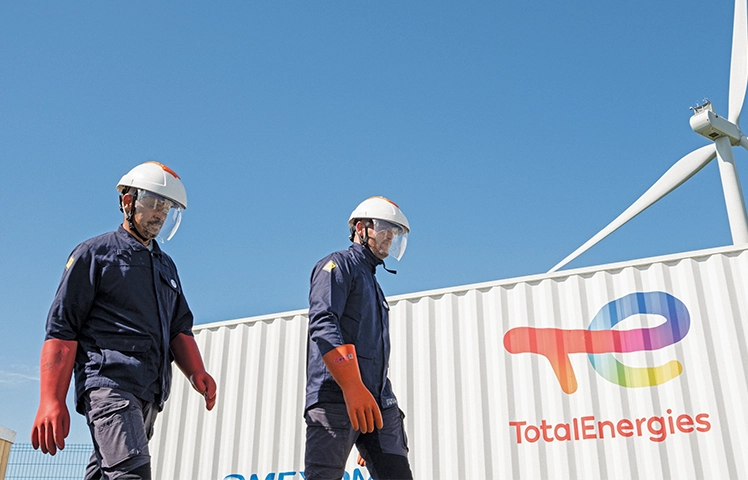
Energy sits at the centre of modern life, shaping how people live, move, work and grow. At TotalEnergies, our role is to make that energy work better for the world.
We are a global, integrated energy company operating across the entire energy value chain, from oil and biofuels to natural gas, biogas and low-carbon hydrogen, and from renewables to electricity.
>1,00,000people
Global workforce
120
Countries
100years
Of pioneering spirit
We are committed to meeting today’s energy needs while actively building the energy systems of tomorrow.
Our purpose is clear:
To provide as many people as possible with energy that is more reliable, more affordable and more sustainable.
How We Work
Scale brings responsibility. That responsibility shapes every decision we make, from the way we operate our assets to how we engage with communities, partners and governments.
Sustainability is not a standalone priority at TotalEnergies; it is embedded into our strategy, investments and day-to-day operations. We continuously adapt our portfolio, accelerate low-carbon solutions and invest in innovation to support a responsible and inclusive energy transition.
Our commitment is reflected in a diversified and balanced energy portfolio.






2025 Key Highlights

What We Stand For
Our culture is defined by five core values that guide both our actions and our relationships.


Key Figures
Financial Indicators 2025(1)
Extra-Financial Indicators 2025
Notes:
(1) Refer to the glossary for definitions and additional information on alternative performance measures (Non-GAAP measures)
(2) Subject to approval by the Shareholders’ Meeting on May 29, 2026
(3) Excluding leases: 19.7% including leases
Our Operational Performance 2025
Notes:
1 Company production includes E&P production and Integrated LNG production
2 Includes solar, wind, hydroelectric and gas flexible capacities
3 Includes 17.25% of Adani Green Energy Ltd’s gross capacity, 50% of Clearway Energy Group’s gross capacity, and 49% of Casa dos Ventos’ gross capacity
Our Transition Strategy
More Energy. Lower Emissions.
As global energy demand grows, reducing emissions remains an urgent priority. TotalEnergies’ transition strategy is designed to address both, supporting economic development while progressively lowering the carbon intensity of the energy we deliver.
Aligned with the objectives of the Paris Agreement, our approach focuses on providing reliable, affordable energy while advancing the energy transition.
A Balanced, Multi-Energy Model
Our integrated multi-energy strategy is built on two pillars: Oil & Gas – in particular liquefied natural gas (LNG) – and Electricity (Integrated Power), the energy at the heart of the transition.
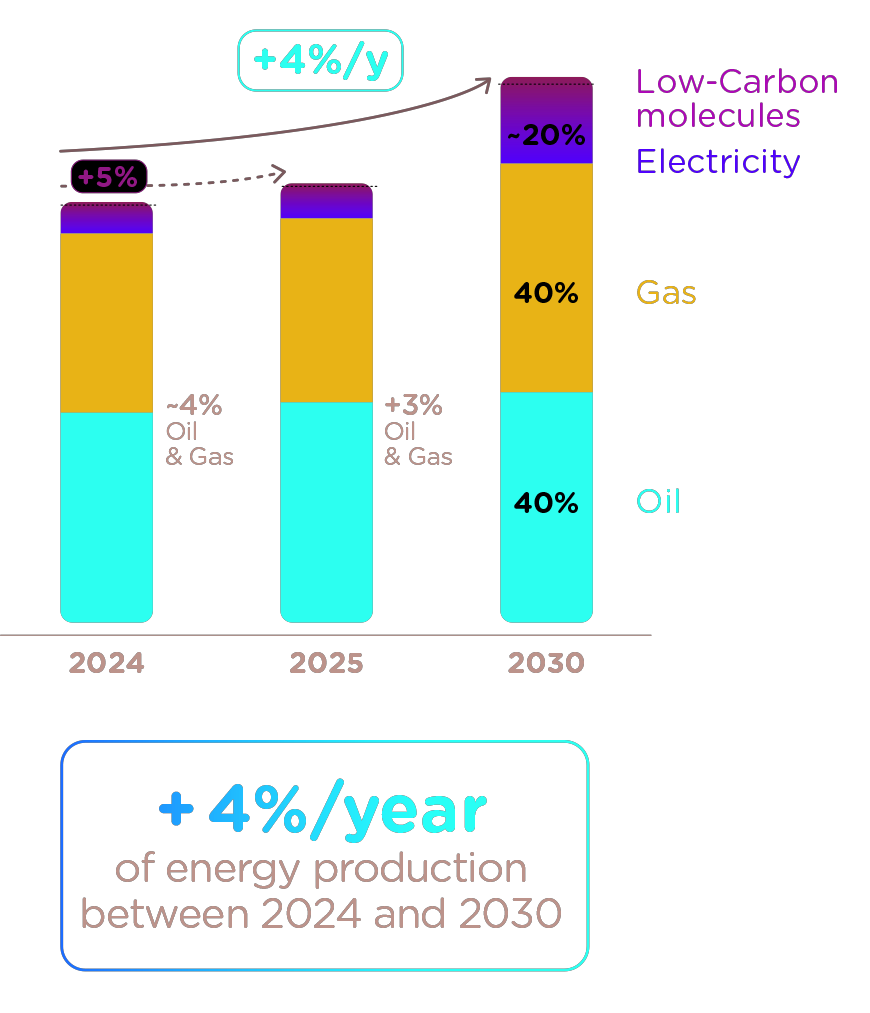
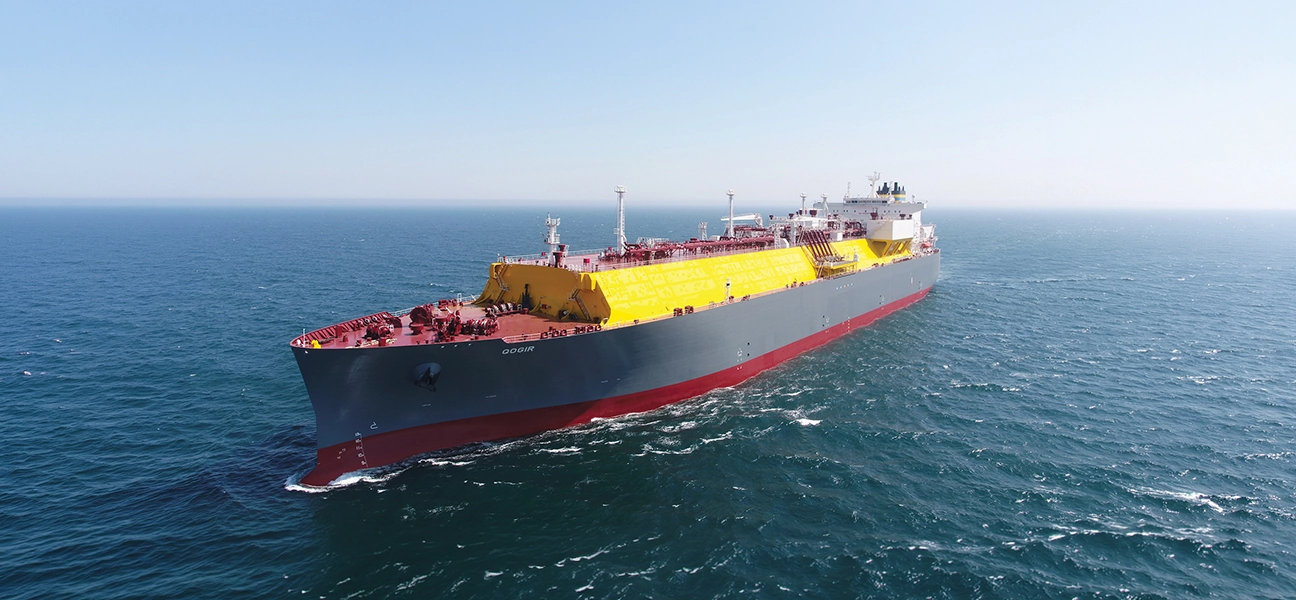
While drastically reducing the emissions of our operations, we plan to increase our oil and gas production – primarily LNG, which is key to the energy transition – by 3% per year until 2030.
Our main responsibility as a producer of hydrocarbons is to reduce the greenhouse gas emissions associated with their production. This is why the key indicator of our progress in this Oil & Gas pillar is the reduction in Scope 1+2 emissions(1).
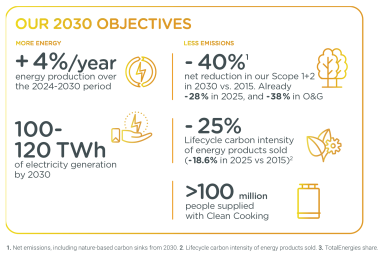
We plan to increase our electricity production to more than 100 TWh by 2030. In addition, we are also investing in low-carbon molecules: biofuels and biogas, as well as hydrogen and its derivatives: e-fuels and Sustainable Aviation Fuel (SAF).
2030 Objectives: Progressing the Energy Transition
Our Ambition of Carbon Neutrality by 2050
Together with Society
By 2050, TotalEnergies aims to achieve carbon neutrality across its global operations and energy portfolio, in collaboration with society. This ambition reflects a profound transformation of the Company’s energy mix, business model and contribution to the energy system.
A Transformed Energy Mix by 2050
By mid-century, TotalEnergies expects its energy production (including hydrocarbons and electricity) to evolve as follows:
- About 50% of our energy in the form of low-carbon electricity, including the corresponding storage capacity, totalling around 500 TWh/year, on the premise that TotalEnergies would develop about 400 GW of gross renewable capacity.
- About 25% of our energy, equivalent to 50 Mt/year of low-carbon energy molecules in the form of biogas, hydrogen, or synthetic liquid fuels from the circular reaction: H2 + CO2 e-fuels.
- About 1 Mboe/day of Oil & Gas, primarily liquefied natural gas (roughly 0.7 Mboe/day) with very low-cost oil accounting for the rest. Most of that oil would be used in the petrochemicals industry to produce about 10 Mt/year of polymers, of which two-thirds would come from the circular economy. That oil and gas would represent:
- About 10 MtCO2e/year of Scope 1 residual emissions, with methane emissions aiming towards zero (below 0.1 MtCO2e/year); those emissions would be offset in full by projects using nature-based solutions (natural carbon sinks).
- Scope 3 emissions totalling about 100 MtCO2e/year. As part of its approach towards carbon neutrality, together with society, TotalEnergies would contribute to “eliminate” the equivalent of 100 Mt/year of CO2 generated by our customers by developing carbon utilisation (CCU) and carbon capture and storage (CCS) solutions of approximately 100 MtCO2e/year.
Delivering Energy Responsibly
The transition to a more sustainable world cannot be addressed through climate action alone. It requires balancing environmental responsibility with economic progress and social inclusion.
At TotalEnergies, sustainable development means delivering energy solutions that respond to growing global demand while respecting natural resources and supporting long-term development. This approach recognises the interdependence between energy, climate, biodiversity, water, ethics and governance.
Our actions are aligned with the United Nations Sustainable Development Goals and are embedded across the Company’s strategy, project lifecycle and operations, guiding how we invest, operate and engage with society.
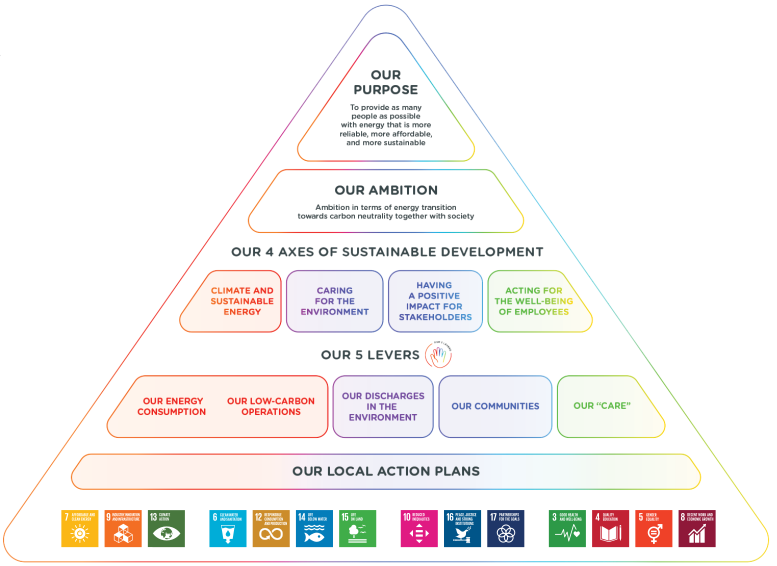
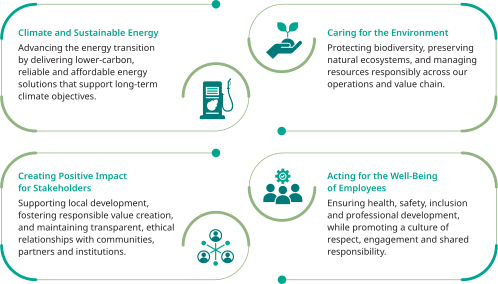
A Commitment Built on Four Pillars
TotalEnergies’ contribution to sustainable development is structured around four complementary priorities:
Our 5 Levers for a Sustainable Change

1 - Energy Consumption
In my operations, I review all my energy consumptions and aim to minimise them. In my projects, I design installations to minimise energy consumptions.

2 - Low-carbon Operations
I promote the use of renewable energies and low-carbon technologies in my projects and my operations, taking into account a CO2 cost of USD 100/t. I do the same with my customers and suppliers to enable them to reduce their emissions.

3 - Discharges in the Environment
In my operations, I review all discharges to air, water, oceans and soil, as well as waste, and aim to minimise them in the light of the best available technologies and practices. In my projects, I design installations to minimise pollution and waste.

4 - Our Communities
I know the neighbours of my site and my stakeholders; I engage and maintain a constructive dialogue with them, including through the careful handling of complaints. I anticipate this dialogue right from the design stage of a new project.

5 - Care
I pay attention to my colleagues and report when one of them shows signs of not being well “mal-être”.
TotalEnergies’ Approach to Sustainable Development