Growing Fast, Staying Resilient
As ATGL scales its clean energy reach across new geographies and customer segments, the risk landscape is evolving in complexity and intensity. Growing fast requires not just speed, but foresight. Our Risk Management Policy and Enterprise Risk Management (ERM) framework provide the structure and intelligence to anticipate risks early, respond decisively and capture opportunities responsibly. This enables us to scale with confidence, without compromising on safety, stability or trust.
Risk Governance
Risk oversight is led by the Board and the Risk Management Committee (RMC), supported by the Chief Risk Officer and designated Risk Coordinators and Champions. The framework follows a balanced bottom-up and top-down approach, with periodic reviews and regulatory disclosures ensuring transparency and accountability.
Board of Directors
The Board sets the tone at the top by fostering a culture of transparency and effective risk management. It periodically reviews the risk management framework, evaluates key risks, and provides strategic guidance to ensure the organisation remains resilient and well-prepared.
Risk Management Committee (RMC)
The RMC monitors both internal and external risk environments, evaluates the Company’s risk exposure, and provides oversight on risk assessment and management processes. It supervises the implementation of the Risk Management Plan and reviews internal controls and systems, recommending enhancements where necessary.
Chief Risk Officer
The CRO serves as the custodian of the risk management process, ensuring its consistent and effective implementation across business functions. The role includes facilitating coordination between the RMC and business units to drive robust and efficient risk management practices.
Risk Categorisation


Risk Coordinators and Champions
Risk Coordinators and Risk Champions are trained professionals responsible for identifying and assessing risks within their respective areas. They communicate identified risks to the CRO and ensure timely implementation of mitigation actions in alignment with the Company’s risk management framework.
Sustainability Governance
We recognise the increasing relevance of environmental, social, and governance (ESG) risks and opportunities in shaping business resilience and long-term performance. The Board and its dedicated committees, especially the Corporate Responsibility Committee (CRC), provide oversight to the ESG and sustainability matters, integrating them into our overall strategy, Enterprise Risk Management framework and decision-making.
Read more about our Sustainability Governance
Integration of Sustainability Risks & Opportunities with Strategy
(IFRS S1 Disclosure 32(a), 44(c))
We integrate the identification and assessment of risks and opportunities into our strategic decision-making processes to support long-term value creation and sustainable growth. This integration ensures that material risks and opportunities, including those related to climate and ESG factors, are considered while setting strategic priorities, allocating capital, and planning operations.
Read about our Climate Strategy
ERM Framework and Risk Management Process
Risk Identification
Systematic identification of potential risks arising from the external and internal environment, including market dynamics, regulatory changes, political and social factors, technological developments, and strategic or operational activities. Risks are defined with clarity on their underlying causes.

Risk Management Lifecycle
Periodic Risk Re-categorisation
Risk Coordinators and Risk Champions periodically reassess and re-categorise risks into Low, Medium, or High, based on evolving business conditions or emerging risk factors.
Risk Assessment
Each identified risk is evaluated based on:
- Likelihood of occurrence
- Potential impact
Risks are categorised as Low, Medium, or High, aligned with the organisation’s risk appetite. Appropriate mitigation timelines are defined for all assessed risks.
Review & Reporting
Escalation of Key Risks: Material risks are escalated by Risk Champions to the CRO on a quarterly basis and, where required, to the Risk Management Committee (RMC) and the Board.
Mitigation Progress Review: Implementation status of approved mitigation actions is periodically reviewed and reported to ensure accountability and effectiveness.
Risk Mitigation & Monitoring
Risk Coordinators monitor the implementation of approved mitigation plans and report progress on a quarterly basis. Risk Champions keep tabs on the risk assessment, and provide updates if any through the coordinators and submit mitigation status reports to the Chief Risk Officer (CRO) to ensure timely oversight and corrective action.
Risk Register Management
All identified risks are formally documented in the Risk Register by Risk Coordinators once assessments are completed. The Risk Register is reviewed quarterly, circulated to relevant stakeholders, and comprehensively reviewed annually under the guidance of the Chief Risk Officer.
Risk Heat Map
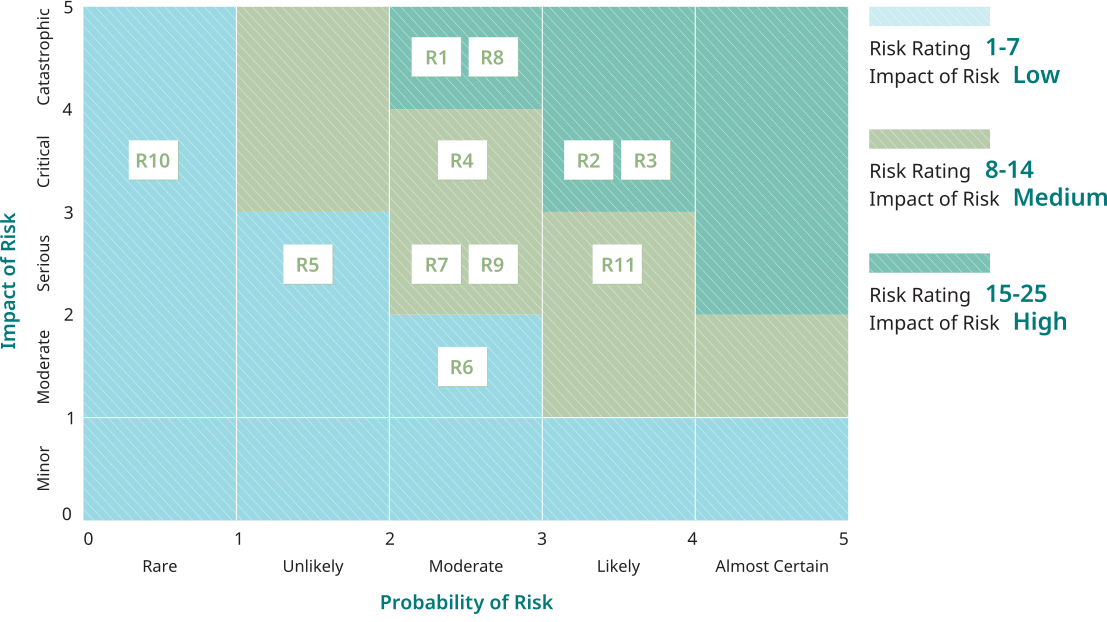
Our Top Risks
| Risk | Responsibility | Grade | |
|---|---|---|---|
| R1 | Regulatory & Compliance Risk | Regulatory Compliance Team | High |
| R2 | Business Risk | Business Development Team | High |
| R3 | Competition Risk | Business Development Team | High |
| R4 | Project Risk | Project & Techno-Commercial Team | Medium |
| R5 | Technology Risk | CIO Team | Low |
| R6 | Market Entry Risk | Business Development Head | Low |
| R7 | Health and Safety Risk | Regional Heads & ESG Team | Medium |
| R8 | Reputational Risk | CEO Office Team | High |
| R9 | Financial Risk | Finance Team | Medium |
| R10 | Policy Stability Risk | Regional Heads, CEO’s Office, Corporate Affairs | Low |
| R11 | Human Resource Risk | Human Resource Head | Medium |
Key Risks and Mitigating Actions
Capitals


Material Topics
Strategic Priorities
Regulatory and Compliance Risk
Risk Overview
The risk of regulatory non-compliance arising from inadequate monitoring or tracking of statutory requirements. This includes the risk of non-fulfilment of Minimum Work Programme (MWP) obligations prescribed by PNGRB for GA, which may result in regulatory action or financial penalties.
Potential Impact
Our CGD operations are subject to regulatory oversight by authorities including PNGRB and the Ministry of Petroleum and Natural Gas (MoPNG), with compliance requirements evolving in line with regulatory and market developments. Any changes in the regulatory framework may have a material impact on operations and performance.
In addition, as a listed entity, ATGL is required to comply with SEBI’s Listing Obligations and Disclosure Requirements (LODR). Instances of non-compliance may attract penalties and regulatory scrutiny, impacting stakeholder confidence and enterprise value.
Mitigating Measures
- Maintain an updated Key Advocacy Charter to track regulatory priorities and engagement
- Undertake advocacy initiatives independently and through industry associations
- Provide timely feedback on proposed regulatory amendments and consultations
- Participate in open-house discussions and stakeholder interactions with regulatory authorities
- Operate a structured compliance monitoring framework managed by the Secretarial team
- Use Legatrix compliance management software to track, monitor, and report regulatory obligations
Capitals at Risk

Strategy at Risk
Material Topics
Business Risk
Risk Overview
The risk of adverse business performance arising from volatility in natural gas prices, changes in domestic gas allocation, and increasing competitive intensity. This includes potential revenue and margin pressures due to higher procurement costs, dependence on OMC/dealer networks, and the expiry of marketing or infrastructure exclusivity, which may intensify competition and impact market share.
Potential Impact
Our natural gas supply for CNG and domestic sectors is sourced partly from GAIL, based on prevailing domestic gas allocation and pricing guidelines of MOPNG, the balance requirement is sourced from the market. Gas for Industrial and Commercial segments is also sourced from the open market. Any increase in natural gas prices, reduction in domestic allocation, or inability to source gas may negatively affect our business, operations, and cash flows.
Mitigation Measures
Gas Sourcing and Price Management
- A dedicated gas sourcing team ensures uninterrupted availability and effective management of gas supplies
- Gas sourcing strategies are reviewed and updated regularly in line with prevailing market dynamics
- Short- to medium-term sourcing plans are implemented to manage price volatility
- Proactive advocacy is undertaken to mitigate price and volume risks arising from policy or regulatory changes
Portfolio and Network Optimisation
- Strategic expansion of Dealer-Owned Dealer-Operated (DODO) CNG stations to reduce reliance on Company-Owned Lease-Operated (COLO) dealer models and enhance cost efficiency
Customer Engagement and Market Responsiveness
- Direct engagement with industrial customers to understand evolving requirements, alternate energy sources and ensure continuity of supply
Regulatory Monitoring and Strategic Readiness
- Continuous monitoring of regulatory developments, including the Open Access/Common Carrier framework proposed by PNGRB
- Business strategies are adapted proactively in response to regulatory and policy changes
Capitals at Risk

Strategy at Risk
Material Topics
Competition Risk from Alternative Fuels
Risk Overview
The risk of reduced demand and revenue arising from increased price competitiveness of alternative fuels relative to natural gas. The growing adoption of alternative mobility and energy solutions, including electric vehicles (EVs), LNG, and emerging clean fuel technologies, may impact the Company’s ability to retain and grow its customer base.
Potential Impact
Customers may shift to more cost-effective or technologically advanced fuel alternatives, which could affect volumes and revenues. The increasing penetration of electric vehicles and the emergence of hydrogen-based solutions pose competitive challenges, particularly for the CNG segment. These shifts may influence long-term demand patterns and market share dynamics.
Mitigating Measures
- Gas price volatility is addressed through a price cap mechanism (for APM Gas) aligned with the Government’s vision of promoting a gas-based economy
- Active engagement with OEMs and retrofitment agencies to develop and offer innovative, customer-centric fuel solutions
- Strategic diversification of the Company’s energy portfolio through expansion into EV charging infrastructure, biogas, and LNG segments, enabling the Company to convert adoption-related risks into long-term growth opportunities
Capitals at Risk

Strategy at Risk
Material Topics
Project Risk
Risk Overview
The risk of operational and project-related disruptions arising from interruptions in gas supply, infrastructure failures, regulatory delays, or procurement constraints. This includes potential supply disruptions at CGS XYZ, pipeline damage due to corrosion, delays in statutory approvals, slower-than-planned customer conversions, and equipment shortages caused by demand–supply imbalances.
Potential Impact
Any disruption to the Company’s gas sourcing, transmission, or distribution infrastructure may adversely affect operational continuity, customer service, reputation, and cash flows. Delays in project execution, including the commissioning of new filling stations or conversion of industrial and commercial customers, may also impact revenue realisation and overall business performance.
Mitigating Measures
- Long-standing gas transmission and upstream arrangements have enabled reliable and continuous supply over extended periods
- Alternative supply mechanisms, including cascade movement, are deployed during disruptions, particularly to support the CNG segment
- Engineering, design, and operational processes are aligned with established industry best practices
- Dedicated operations, maintenance, and emergency response teams are available on a 24x7 basis to manage incidents and restore operations promptly
- Robust asset integrity management systems are in place, supported by regular training to strengthen monitoring, prevention, and mitigation capabilities
- Project execution follows structured project management practices, with ongoing engagement with local and central authorities for grant of requisite permissions
Capitals at Risk

Strategy at Risk
Material Topics
Technology Risk
Risk Overview
The risk of operational disruption and data compromise arising from failures of IT and OT systems, cyber intrusions, malware, or ransomware attacks. Such incidents may impact system availability, data integrity, and continuity of critical business processes.
Potential Impact
System failures caused by mechanical issues, natural events, or fire incidents may interrupt operations and affect revenue generation. Cybersecurity incidents, including data breaches and ransomware attacks, may lead to financial losses, operational inefficiencies, regulatory exposure, and reputational damage.
Mitigating Measures
- Business Continuity and Disaster Recovery: SAP, the Company’s core business application, is hosted on the Google Cloud Platform (GCP) with a dedicated Disaster Recovery (DR) environment to support business continuity
- Data Backup and Recovery: Non-SAP applications are protected through structured backup mechanisms using Commvault and GCP, ensuring data availability and recoverability
- Cybersecurity and Network Protection: The IT infrastructure is secured through encrypted networks and multiple layers of security controls, including Antivirus (AV), Endpoint Detection & Response (EDR), and other advanced cybersecurity tools to mitigate cyber threats and unauthorised access
Capitals at Risk

Strategy at Risk
Material Topics
Market Entry Risk
Risk Overview
The risk of reduced competitiveness arising from challenges in entering new markets or sustaining brand leadership in existing and emerging segments. Increased competition, including from alternative fuel solutions, may impact the Company’s ability to retain market share and reinforce its position as a preferred energy provider.
Potential Impact
The Company’s growth trajectory may be affected if market entry strategies do not translate into successful scale-up or customer adoption. Entering new markets and ventures requires sustained investment of resources, capabilities, and time, and any execution gaps may adversely impact operational performance, brand strength, and financial outcomes.
Mitigating Measures
- Formulation and execution of adaptive market entry strategies aligned with evolving customer and industry dynamics
- Deployment and development of skilled talent to support new initiatives and business expansion
- Active engagement with policymakers, particularly in emerging segments such as Compressed Bio-Gas (CBG), to help shape enabling regulatory frameworks
- Continuous customer engagement through 24x7 service support to enhance customer experience and retention
- Implementation of targeted awareness campaigns, marketing initiatives, and digital outreach across areas of operation to strengthen brand visibility and sustain engagement with existing and prospective customers
Capitals at Risk

Strategy at Risk
Material Topics
Health and Safety Risk
Risk Overview
The risk of safety incidents arising from the handling, transportation, and distribution of natural gas, including potential human injury, loss of life, fire, property damage, risks associated with cascade operations, transportation activities, and third-party damage to pipeline infrastructure.
Potential Impact
Given the combustible nature of natural gas, any deviation from established safety protocols may result in gas leaks, fires, or explosions. Such incidents could lead to injuries, asset damage, operational disruptions, financial losses, and adverse impacts on brand reputation and public trust.
Mitigating Measures
- The Company’s CGD network and operational systems are fully compliant with Technical Standards and Specifications (T4S) prescribed by the PNGRB
- Emergency preparedness is ensured through adherence to PNGRB-mandated Emergency Response and Disaster Management Plans across operations
- Safety considerations are embedded into operational procedures, systems, and decision-making processes
- Regular safety training and refresher programmes are conducted for employees and contractor personnel to reinforce safe practices and maintain high standards of operational safety
Capitals at Risk

Strategy at Risk
Material Topics
Reputational Risk
Risk Overview
The risk of erosion in stakeholder confidence and brand credibility arising from adverse events, negative public perception, or lapses in conduct. This includes exposure resulting from inadequate background verification of contractor personnel, reputation-sensitive incidents, or unethical practices that may impact public trust.
Potential Impact
Reputation is a critical intangible asset influencing the Company’s long-term sustainability, growth prospects, and stakeholder relationships. Ineffective management of reputational risks may adversely affect brand value, stakeholder confidence, financial performance, and talent attraction. It may also heighten exposure to regulatory scrutiny, legal action, and associated penalties.
Mitigating Measures
- Establishment of a Board-level Reputation Risk Committee (RRC), comprising 50% Independent Directors, to provide oversight and strategic direction on reputation-related risks
- The RRC oversees the broader Risk Management Framework and periodically evaluates the Company’s reputation risk appetite within a global business context
- Recommendation and adoption of best practices, controls, and preventive measures to manage and mitigate reputational risks effectively
- Strengthening of on-ground security measures through deployment of dedicated security teams and surveillance systems, including CCTV coverage, across operational locations
Capitals at Risk

Strategy at Risk
Material Topics
Financial Risk
Risk Overview
The risk of adverse financial outcomes arising from competitive pricing pressures within the CGD sector, foreign exchange volatility, underperformance of treasury investments, and credit exposure from unsecured sales to select customers. These factors may influence margins, cash flows, and overall financial stability.
Potential Impact
Intense competition on CGD pricing, depreciation of the Indian Rupee against the US Dollar, and sub-optimal returns on investments may collectively affect profitability and enterprise value. Additionally, delays or defaults in customer collections could increase exposure to bad debts and liquidity pressure, requiring corrective financial measures.
Mitigating Measures
- Competitive pricing strategies are implemented across geographical areas, enabling the Company, as the largest private CGD player, to compete effectively with peer CGD entities and alternative fuel providers
- Foreign exchange exposure arising from USD-linked gas procurement is incorporated into sourcing costs and appropriately passed through to end consumers. Currency hedging and related costs are factored into annual budgets
- Customer collections are closely monitored and are primarily utilised for servicing fund-based facilities, including cash credit and overdraft arrangements
- Surplus funds are deployed in Mutual Funds and Fixed Deposits based on projected liquidity requirements, in line with the Company’s Treasury Policy, to optimise risk-adjusted returns
- A structured credit control mechanism is in place, including proactive customer follow-ups, issuance of notices where required, site visits, and payment security measures to minimise bad debt exposure
Capitals at Risk

Strategy at Risk
Material Topics
Political and Policy Risk
Risk Overview
The risk of business disruption arising from changes in the political environment, including revisions to public policy, regulatory frameworks, or withdrawal of approvals. Such developments may influence operating conditions, licensing arrangements, and long-term strategic planning.
Potential Impact
Uncertainty in policy direction or political priorities may affect sectoral attractiveness and growth momentum, leading to delays in project execution or changes in operating assumptions.
Evolving regulatory expectations may also result in higher compliance costs and operational complexity, with implications for business continuity and stability.
Mitigating Measures
- The Company follows a strictly neutral approach, refraining from political affiliations, endorsements, or contributions
- Geographic diversification of operations across multiple Indian states governed by different political administrations helps reduce concentration risk and mitigates the impact of region-specific political changes
Capitals at Risk

Strategy at Risk
Material Topics
Human Resource Risk
Risk Overview
The risk of business disruption arising from higher-than-expected attrition or the loss of critical talent due to competitive market conditions, employee dissatisfaction, or other workforce-related factors. Such attrition may impact operational continuity, productivity, and the achievement of strategic objectives.
Potential Impact
Loss of key personnel may lead to workflow disruptions, increased recruitment and training costs, and pressure on institutional knowledge retention. Prolonged talent gaps can affect productivity, employee morale, and the Company’s ability to sustain long-term growth and operational stability.
Mitigating Measures
- A structured internal mechanism is in place to monitor and track attrition trends across the organisation
- Management Information Systems (MIS) and HR tracking tools are used to analyse workforce metrics and identify emerging attrition risk
- Proactive engagement with employees, including structured interactions and exit discussions, is undertaken to understand underlying concerns and explore retention opportunities where feasible
Capitals at Risk

Strategy at Risk
Material Topics
Managing Climate Risks and Opportunities
Climate-related risks and opportunities form an integral part of our risk management approach. We undertake climate risk and opportunity assessment of our operations in alignment with TCFD/IFRS S2 frameworks. The assessment helps us to identify key physical and transition risks and evaluate their potential impact on our operations and infrastructure across short, medium and long-term horizons under multiple climate scenarios. The insights from this process guide our mitigation and adaptation strategies to effectively manage climate risks and opportunities.
Read more in our Environment section
Emerging Risks
We adopt a forward-looking approach to identifying and managing emerging ESG risks that may impact business continuity and long-term value creation. These risks are identified through the Enterprise Risk Management (ERM) framework and assessed for their potential impact and probability. Relevant mitigation measures are subsequently integrated into operational plans and strategic decision-making.
Read further — Climate Risk Assessment Report

Risk Overview
The global shift towards decarbonisation and India’s accelerating transition to electric and hydrogen-based mobility pose a long-term structural risk to the relevance and utilisation of ATGL’s CNG infrastructure. While natural gas is positioned as a transition fuel, rapid policy support for EVs, advances in battery technology, and the emergence of green hydrogen may accelerate a structural shift away from gas-based mobility, potentially leading to underutilisation or stranding of gas distribution assets over the long term.
Potential Impact
- Asset Stranding Risk: Risk of underutilisation or impairment of CNG stations and related infrastructure
- Capital Allocation Risk: Lower returns on long-gestation gas infrastructure investments
- Strategic Positioning Risk: Misalignment of long-term strategy with evolving mobility and decarbonisation pathways
- Transition Risk: Increased capex requirements to pivot business model towards non-gas energy solutions
Mitigating Measures
- Infrastructure Diversification: Co-locating EV charging stations at existing CNG outlets to leverage network reach and capture emerging mobility demand
- PNG Expansion: Accelerating PNG connections in residential, commercial, and industrial segments, which are less exposed to EV-related disruption
- Green Gas Initiatives: Investing in Compressed Biogas (CBG) and exploring hydrogen blending in gas networks to support energy transition goals
- Technology Pilots: Participating in hydrogen mobility pilots and aligning initiatives with India’s National Hydrogen Mission
Risk Overview
As a provider of critical energy infrastructure, ATGL’s operations are increasingly exposed to cybersecurity threats targeting its digital and operational systems. The growing deployment of SCADA systems, pipeline automation, IoT-enabled assets, remote monitoring platforms, and digital customer interfaces expands the potential attack surface. Malicious cyber activity by organised cybercriminals, hacktivist groups, or state-sponsored actors could attempt to disrupt gas distribution services, compromise safety-critical systems, or access sensitive operational and customer data. Such incidents may have cascading operational, safety, regulatory, and reputational implications.
Potential Impact
- Operational Impact: Cyber compromise of SCADA or pipeline control systems may disrupt services, create pressure imbalances, or reduce operational visibility across networks
- Safety and Environmental Impact: Intrusions into safety-critical systems could trigger emergency shutdowns or operational incidents, potentially affecting employees, customers, and communities
- Regulatory and Compliance Impact: Incidents involving critical infrastructure or personal data may lead to regulatory scrutiny, penalties, or enhanced compliance obligations
- Reputational Impact: Service disruption or data breaches may weaken customer trust and stakeholder confidence
Mitigation Measures
- Defence-in-Depth Security: Layered cybersecurity controls including intrusion detection systems, endpoint protection, network segmentation, and zero-trust principles
- IT–OT Segregation: Clear separation of operational and information technology environments, with secure access controls and hardened SCADA systems
- Continuous Monitoring: 24/7 threat monitoring and automated incident response through a Security Operations Centre
- Incident Preparedness: Periodic testing of cyber incident response plans, including simulations and coordinated escalation protocols
- Risk Transfer and Compliance: Cyber insurance coverage and alignment with recognised cybersecurity and critical infrastructure protection frameworks