Focus Where It Counts Most

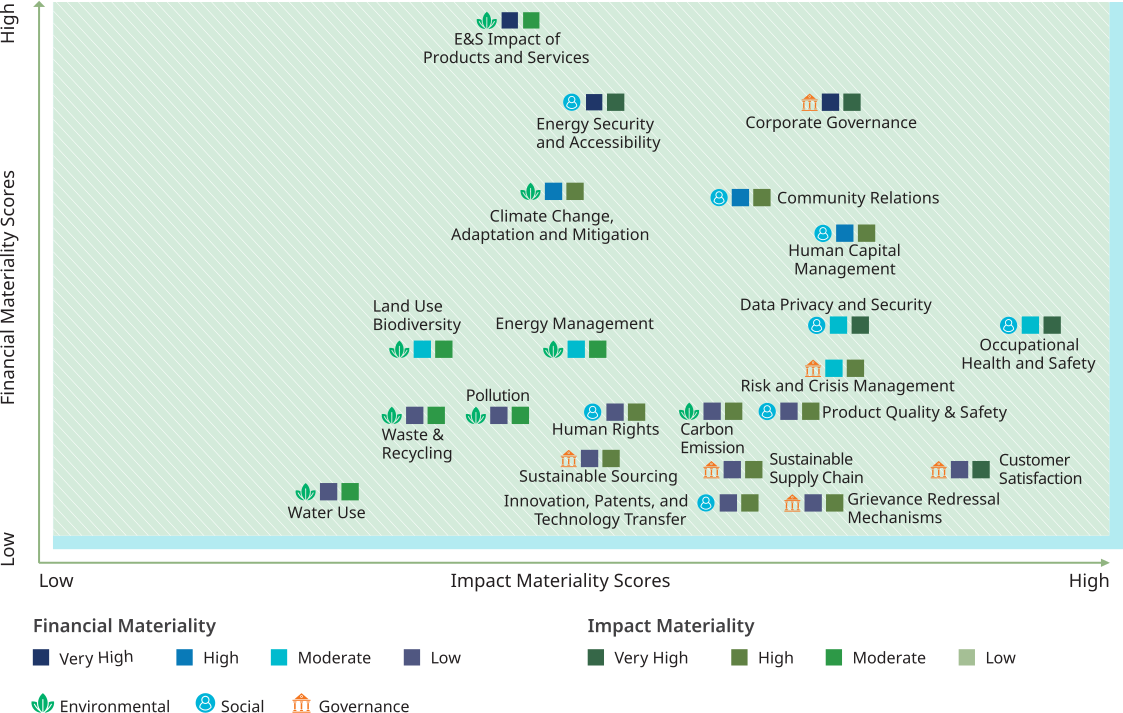
Our materiality assessment helps to identify the aspects that are most relevant and significant to our business and stakeholders. We follow a structured approach in alignment with the EU Corporate Sustainability Reporting Directive (CSRD) for double materiality assessment, assessing topics through the lens of both our impact on the environment and society, and the financial and operational implications.
The outcomes of this process will shape our ESG priorities by a prioritised set of material themes that communicate our strategy, risk management, sustainable initiatives, ensuring our actions remain focused on long-term value creation and responsible growth communications under international reporting standards.
Impact Materiality
It describes how a company’s activities affect the environment and society, regardless of financial consequences. For instance, greenhouse gas emissions from operations contribute to climate change, which results in broader societal costs.
Financial Materiality
It examines how ESG factors influence a company’s financial value; for example, stricter climate regulations can increase operational costs or alter market dynamics.
Materiality Process
Review of Prior Assessment
- Review of the previous materiality assessment to understand organisational context and evolving priorities
- Analysis of operations and key business processes
Sector Analysis and Benchmarking
- Identification of sector-specific material issues through secondary research and peer benchmarking
Materiality Assessment and Prioritisation
- Development of the materiality matrix integrating impact materiality and financial materiality
- Prioritisation and visual representation of material topics
- Identify Potential Impact (Positive & Negative, Risk & Opportunity) for complete understanding of Sustainability challenges and prospects for ATGL business
Value Chain Mapping and Stakeholder Engagement
- Identification of stakeholders across the value chain
- Stakeholder engagement through structured surveys and consultations
Materiality Matrix
Our Proactive Approach to Managing Top Material Matters Across Our ESG Priorities
Capitals


Stakeholders


Strategic Priorities
GRI
BRSR
To know more about the principles please click here
Environmental
GRI Alignment
BRSR Alignment
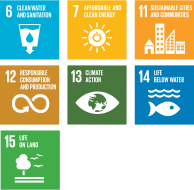
SDG Alignment
Financial Impact
Stakeholders Impacted

Strategic Priority
Impact
Risk 
- Extreme weather events such as heatwaves, floods, and cyclones can damage gas infrastructure, disrupt supply, and increase safety and maintenance costs
- Transition risks from carbon pricing, tighter environmental regulations, and shifting consumer preferences may affect operating economics and long-term profitability
- Supply chain disruptions, regulatory non-compliance, or delayed infrastructure adaptation can expose the business to financial, operational, and reputational risks
Opportunity 
- Natural gas supports the transition to a lower-carbon energy system by replacing more carbon-intensive fuels
- Investments in compressed biogas (CBG) and EV charging infrastructure contribute to emissions reduction and cleaner mobility solutions
- Climate-resilient infrastructure and adaptive technologies enhance operational continuity, asset resilience, and service reliability
KPIs Mapped
- Reduction in Scope 1, 2, and 3 carbon emissions (%)
- Methane leak reduction (%) across pipelines and storage assets
- Share of renewable and clean energy solutions in the energy mix (%)
- Climate risk preparedness index
- Energy efficiency improvements across operations (%)
Mitigating Action
- Investment in renewable and low-carbon energy solutions, including CBG and EV infrastructure
- Deployment of methane leak detection and monitoring systems to reduce fugitive emissions
- Decarbonisation technologies aligned with regulatory and policy developments
- Initiated a mass afforestation programme to plant ~50,000 native trees at the Yavatmal GA (Washim district) to support carbon sequestration and climate resilience
GRI Alignment
BRSR Alignment
SDG Alignment

Financial Impact
Stakeholders Impacted

Strategic Priority
Impact
Risk 
- Pipeline leaks, accidental spills, gas leaks, and fire incidents may adversely impact ecosystems, soil, water bodies, and nearby communities, leading to remediation costs, regulatory action, and reputational risks
- Combustion of natural gas contributes to CO2 emissions, exposing the business to transition risks related to climate change regulation and decarbonisation pressures
- Land use for CBG plants and gas distribution infrastructure may impact local biodiversity if not managed responsibly
- Demand fluctuations for energy products due to changing consumer preferences may create revenue volatility and operational inefficiencies
Opportunity 
- Cleaner energy products reduce greenhouse gas emissions and air pollutants compared to coal and liquid fuels, supporting improved indoor and outdoor air quality
- Diversification into compressed biogas (CBG) enables circular economy practices by utilising agricultural and organic waste, reducing environmental impact while supporting farmers’ livelihoods
- Adoption of circular economy approaches and energy efficiency initiatives improves resource utilisation, reduces leakage, and enhances operational performance
KPIs Mapped
- Continuous supply of cleaner energy fuels
- Adoption of circular economy approaches
- Energy efficiency improvements
- Measurement and reduction of gas leakage
Mitigating Action
- Diversification into E-Mobility and compressed biogas (CBG) businesses to offer cleaner energy solutions and lower GHG emissions from natural gas usage
- Leak Detection and Repair (LDAR) programmes to identify and reduce methane leakage across gas distribution networks
- Continuous improvement in energy efficiency and monitoring of emissions across operations
- Integration of circular economy principles to minimise environmental footprint across the product and service lifecycle
Governance
GRI Alignment
BRSR Alignment
SDG Alignment

Financial Impact
Stakeholders Impacted

Strategic Priority
Impact
Risk 
- Weak governance or inadequate oversight may lead to regulatory non-compliance, legal penalties, financial losses, and operational disruptions in a tightly regulated energy sector
- Gaps in risk management and internal controls could expose the Company to financial mismanagement, cyber threats, supply disruptions, and crisis events
- Inadequate governance across the value chain may result in ethical lapses, labour rights violations, and reputational damage, impacting stakeholder confidence
Opportunity 
- Strong corporate governance frameworks enhance regulatory compliance, enterprise risk management, and long-term financial stability
- Transparent disclosures and ethical business practices strengthen investor confidence and stakeholder trust
- Board-level ESG oversight and integrated governance practices support business continuity, resilience, and sustainable value creation
KPIs Mapped
- Board independence
- Regulatory and compliance cases monitored
- Whistleblower complaints and resolution rate
- Cybersecurity incidents
- ESG risk oversight mechanisms
Mitigating Action
- Robust governance structures with active Board and committee oversight
- Strong internal controls, compliance monitoring, and whistleblower mechanisms
- Board-level ESG governance and sustainability oversight to manage transition, climate, and operational risks
- Governance-led crisis preparedness to enhance resilience against supply disruptions, cyber incidents, and climate-related events
Social
GRI Alignment
BRSR Alignment
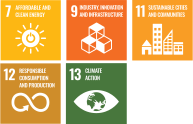
SDG Alignment
Financial Impact
Stakeholders Impacted

Strategic Priority
Impact
Risk 
- Disruptions in gas supply due to infrastructure failures, geopolitical factors, climate-related events, or global energy price volatility can affect business continuity, customer reliability, and revenue stability
- Supply shortages or service interruptions may lead to regulatory scrutiny, customer dissatisfaction, and reputational risks
- Climate-related impacts on energy supply chains may challenge long-term energy security and accessibility
Opportunity 
- Reliable and stable gas supply supports households, industries, and transportation, strengthening customer trust and long-term demand
- Expansion of CGD networks improves access to affordable and cleaner energy, reducing reliance on polluting fuels and supporting public health and air quality outcomes
- Integration of compressed biogas (CBG) and EV infrastructure enhances energy diversification, resilience, and alignment with India’s clean energy transition
KPIs Mapped
- Share of energy from renewable and cleaner sources
- Infrastructure expansion rate
- Customer accessibility and affordability index
- Gas supply reliability
- Unplanned service disruptions (count/year)
Mitigating Action
- Strengthening gas infrastructure and network resilience to minimise supply disruptions
- Diversification of energy sources through CBG and EV infrastructure integration
- Deployment of digital monitoring systems to improve supply reliability and operational responsiveness
- Alignment with government policies to enhance accessibility and long-term energy security
GRI Alignment
BRSR Alignment
SDG Alignment

Financial Impact
Stakeholders Impacted

Strategic Priority
Impact
Risk 
- Inadequate workforce policies, insufficient training, or weak safety practices may lead to higher attrition, workplace incidents, regulatory penalties, and reputational risks
- Occupational hazards associated with gas handling and other relatable work can increase healthcare costs, compliance exposure, and operational disruptions
- Gaps in diversity, wage equity, or contractual workforce management may result in labour disputes, reduced inclusivity, and challenges in talent attraction and retention
Opportunity 
- Strong health, safety, and well-being practices reduce workplace incidents, enhance productivity, and support workforce stability
- Continuous learning, upskilling, and digital capability development strengthen operational efficiency and long-term competitiveness
- Fair labour practices, transparent engagement, and diversity initiatives foster employee satisfaction, strengthen organisational culture, and enhance employer reputation
KPIs Mapped
- Employee safety incident rate
- Training and development hours per employee
- Employee engagement and satisfaction index
- Workforce diversity (%)
- Attrition rate (%)
Mitigating Action
- Implementation of robust HSE frameworks and workforce safety programmes
- Structured training, upskilling, and capability-building initiatives aligned with clean energy and digital transformation
- Employee engagement, wellness, and diversity programmes to support inclusion and retention
- Governance-led oversight of labour practices across employees and contractual workforce
GRI Alignment
BRSR Alignment
SDG Alignment

Financial Impact
Stakeholders Impacted

Strategic Priority
Impact
Risk 
- Inadequate community engagement, weak grievance redressal, or environmental concerns may lead to local resistance, protests, legal disputes, and project delays
- Infrastructure expansion may result in land-related challenges, resettlement costs, and regulatory scrutiny if not managed through inclusive consultation
- Safety incidents, gas leaks, or environmental hazards can expose the Company to remediation costs, legal liabilities, and reputational risks
Opportunity 
- Expansion of CGD networks improves access to cleaner and affordable energy, reducing reliance on polluting fuels and supporting community well-being
- Investments in CBG and EV infrastructure create local employment, support MSMEs, and contribute to regional economic development
- Targeted investments in health, education, and environmental initiatives strengthen community trust, social acceptance, and long-term licence to operate
KPIs Mapped
- CSR investment (% of revenue)
- Grievance resolution rate (%)
- Local hiring rate (%)
- Social impact score
- Number of community engagement programmes
Mitigating Action
- Proactive stakeholder engagement and structured grievance redressal mechanisms
- CSR initiatives focused on health, education, livelihoods, and environmental stewardship
- Responsible project planning and community consultation to minimise social and environmental impacts
- Ongoing monitoring of community feedback to strengthen trust and reduce conflict